Define what ready for service looks like
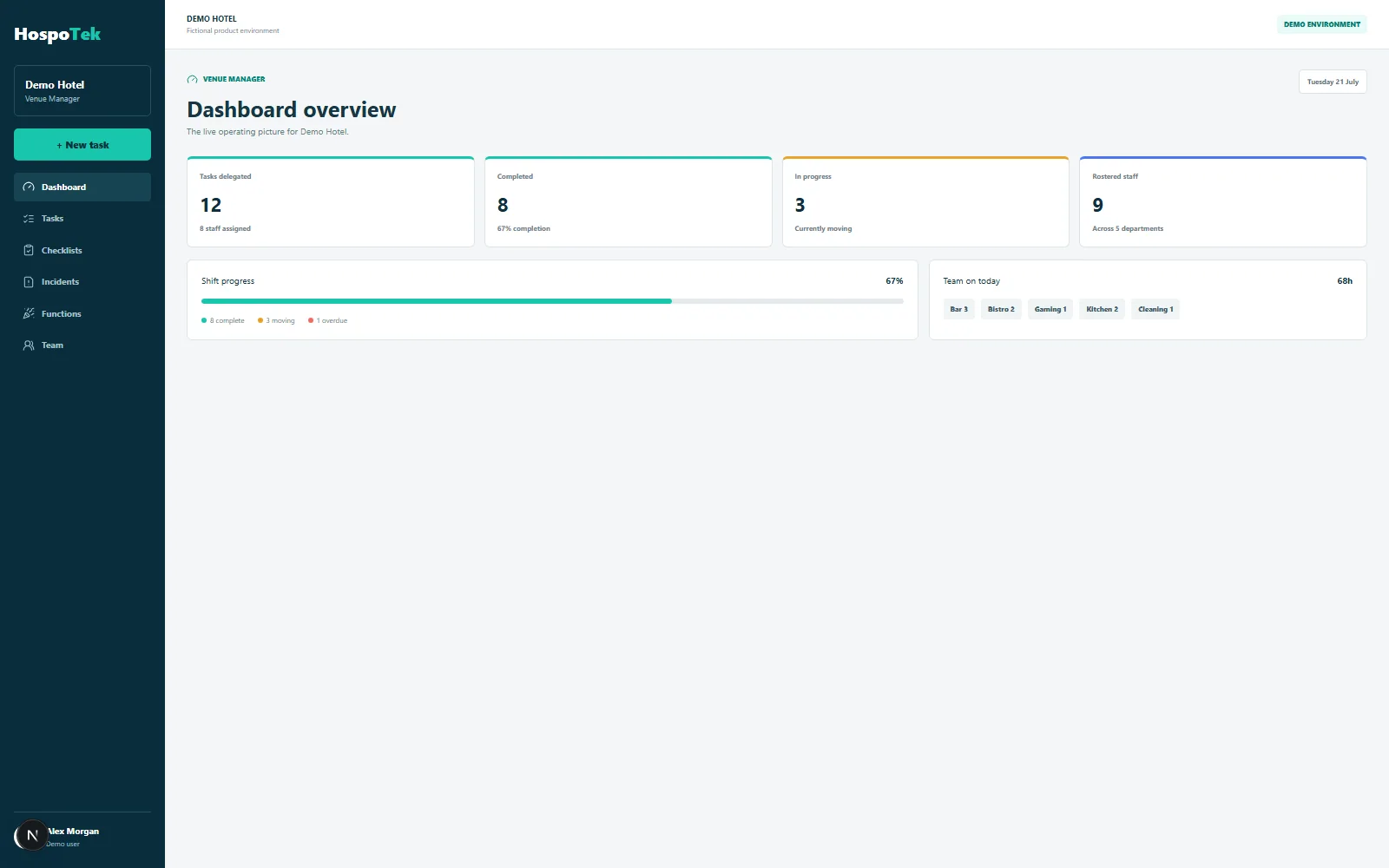
Before writing individual checks, agree on the operating outcome. ‘Open the bistro’ is too broad to guide a new team member or give a manager confidence. Ready for service might mean the room is presented, equipment is operating, stock is at the agreed level, bookings are reviewed and the team has received the relevant handover.
Keep legal, licence, food-safety and internal policy requirements in their proper controlled documents. The checklist should direct the authorised person to the required check; it should not casually rewrite an obligation that needs professional review.
Follow the physical sequence of the shift
A checklist should reduce movement and decision-making. Walk the venue as the opening team does, and arrange items in that order. If a staff member repeatedly moves between the bar, cool room, office and floor, the sequence is creating work rather than organising it.
Department-specific checklists are often easier to own than one enormous venue list. A Duty Manager can still see the wider opening picture while each team works through a relevant, manageable sequence.
- Group checks by department or physical area
- Place time-dependent checks before general presentation work
- Keep specialist checks with appropriately trained or authorised roles
- Separate pre-open work from checks that happen immediately before service
Make every item observable
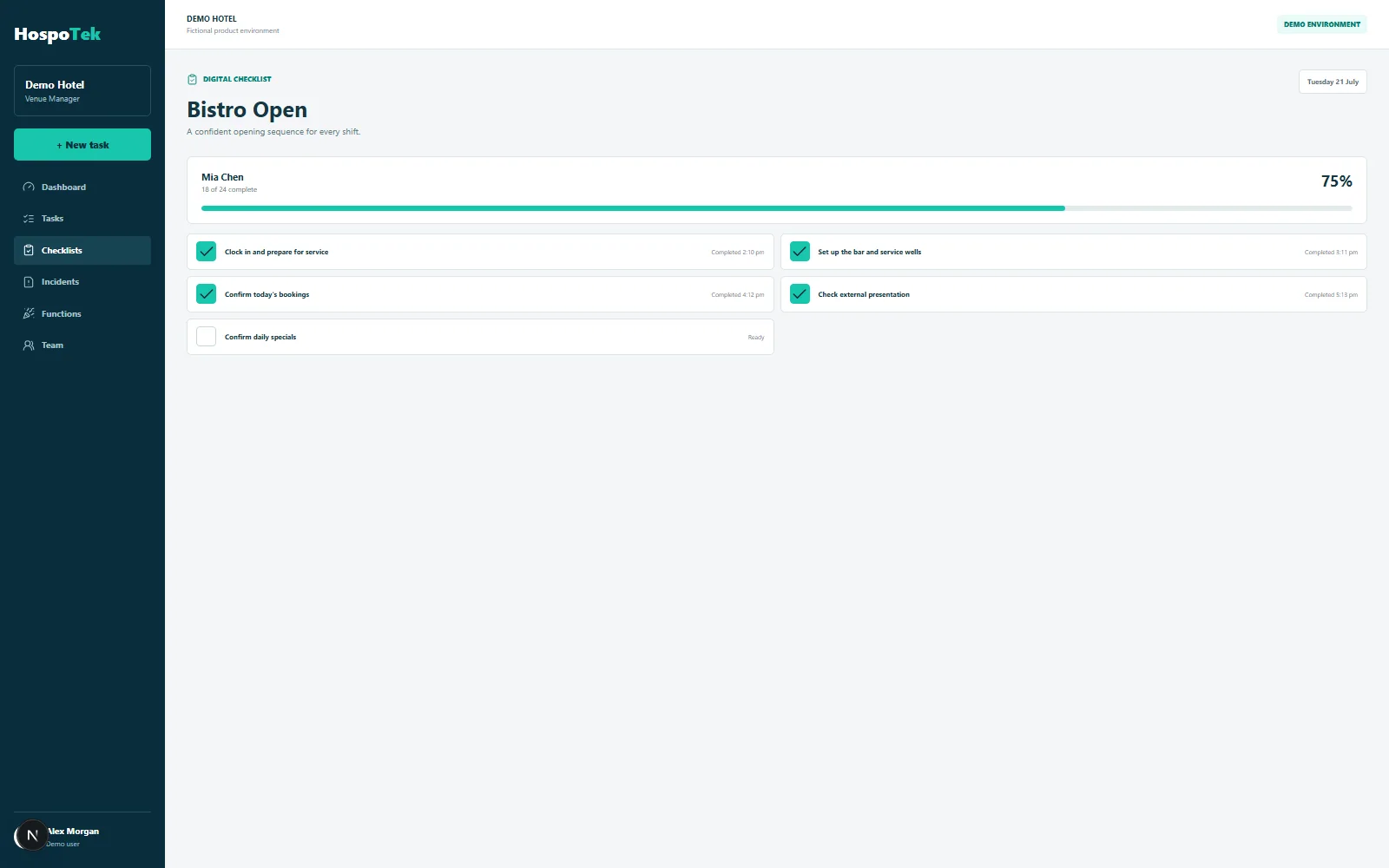
Useful checklist wording describes a result another person can recognise. ‘Check the bar’ depends on local memory. ‘Confirm each service well is stocked to the venue par level’ gives the person completing it and the manager reviewing it a shared standard.
Avoid combining several unrelated actions into one checkbox. If one part fails, the record should make that exception visible rather than forcing the staff member to mark the whole bundle complete or incomplete.
Give exceptions a clear path
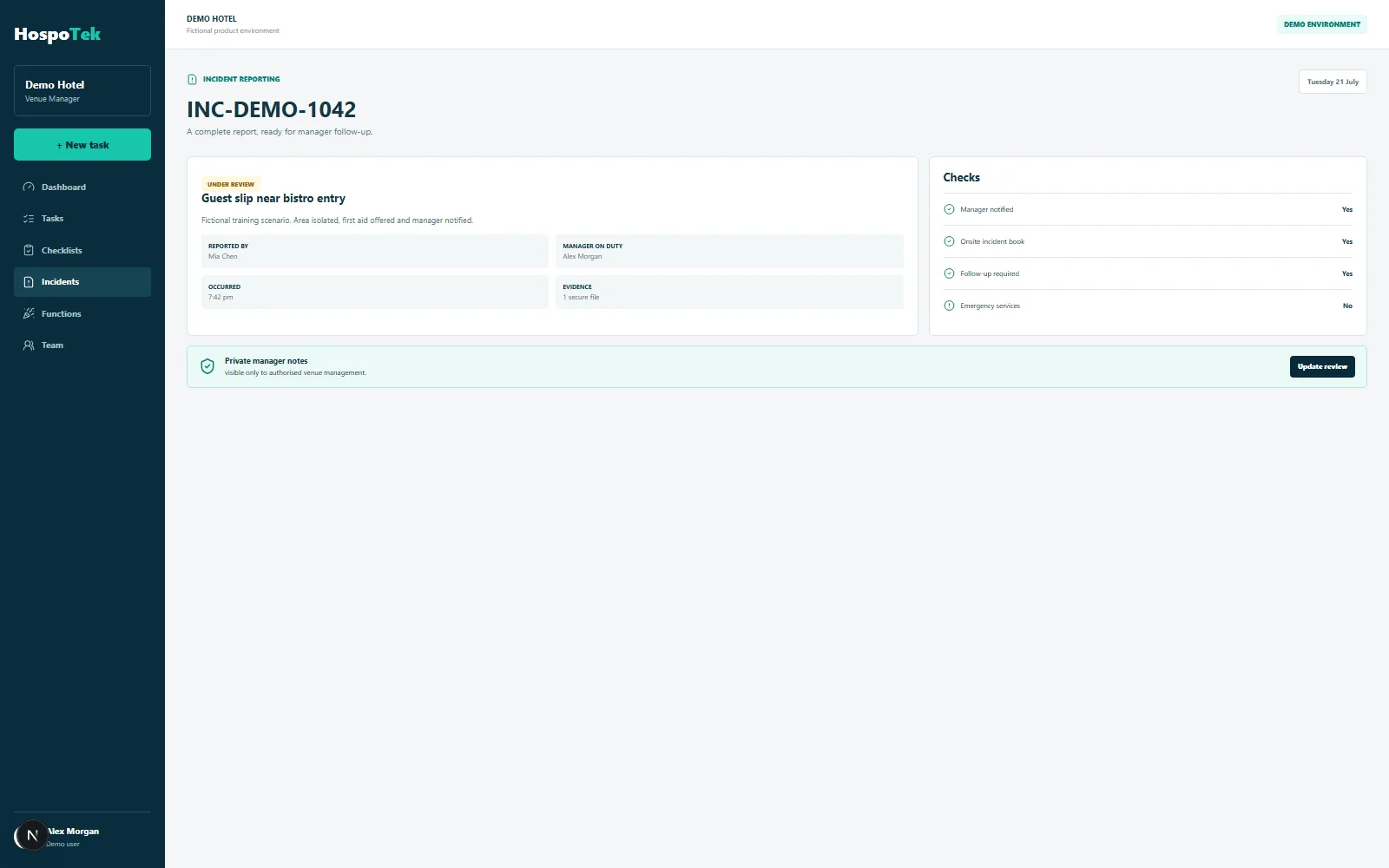
Real venues do not open under perfect conditions. Equipment fails, deliveries run late and staffing changes. The checklist needs a quick way to record the exception, notify the right manager and create follow-up work where required.
A note is not always enough. If the exception presents a safety, compliance or operational risk, the team should follow the venue's escalation process and use the appropriate incident, maintenance or task workflow. Completing the checklist must never imply that the underlying issue is resolved.
- Allow a clear completed, not completed or not applicable response where appropriate
- Require a short reason when a critical item cannot be completed
- Attach evidence only where it is proportionate and handled securely
- Create an owner and due time for follow-up work
- Escalate immediately when the venue's policy requires it
Review the pattern, not just today's submission
Managers should review the opening result before trade, but the larger value appears over time. Repeated incomplete items can show that a standard is unclear, a task is assigned to the wrong role, equipment is unreliable or the opening period is under-resourced.
Change the checklist when the operation changes. Keep the list short enough to use every day, and retire items that no longer protect service, safety, presentation or accountability.