Respond to the situation before reporting it
The reporting process never replaces immediate safety action, emergency response, first aid, manager escalation or any notification required by law, licence condition or venue policy. Deal with the immediate situation first and use the report when it is safe and appropriate to do so.
The person completing the report should understand its purpose: to create an accurate operational record for authorised review. It is not a place to diagnose an injury, decide fault or make promises on behalf of the venue.
Separate an observed fact from an assumption
Write what the reporter saw, heard or did. ‘The guest slipped beside the bistro entry’ is an observation if the reporter saw it. ‘The floor caused the fall’ is a conclusion unless the cause has been properly established.
Where information comes from another person, attribute it. For example: ‘The guest said their left ankle was sore.’ Do not turn that statement into a medical diagnosis. If a detail is unknown, record it as unknown rather than completing the gap from memory or expectation.
- Use names, locations and times where they are known and relevant
- Describe the sequence in neutral, chronological language
- Attribute statements to the person who made them
- Record uncertainty openly
- Avoid blame, speculation and unnecessary personal commentary
Ask consistent questions while details are fresh
A structured form helps the venue collect the same core information across different reporters and shift conditions. It should be short enough to complete accurately, with additional prompts appearing only when they are relevant.
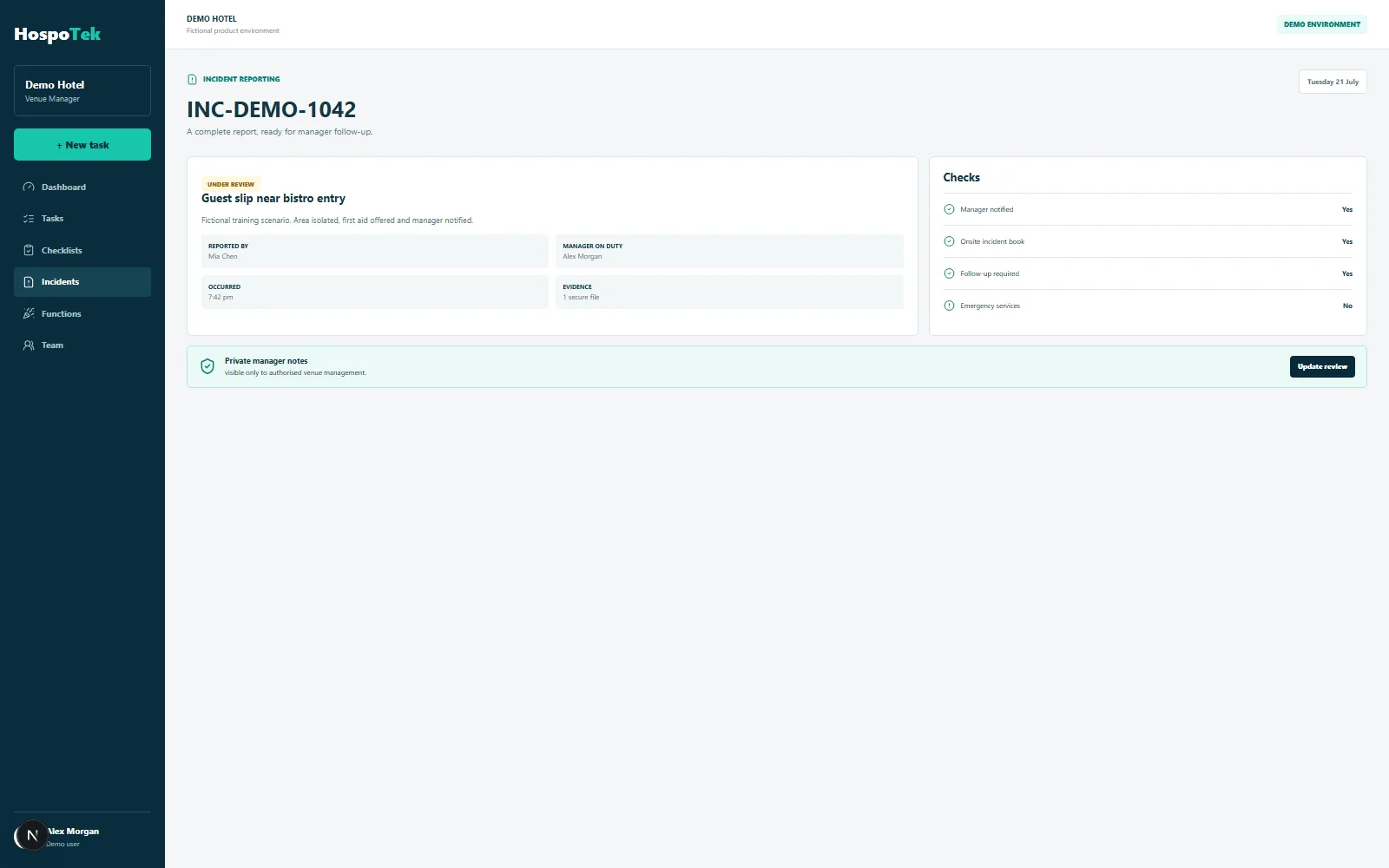
The exact fields depend on the venue and incident type, but the record will usually need the time and place, people involved, immediate response, manager notification, witnesses or source statements, evidence, and whether follow-up is required.
Protect sensitive information and evidence
Incident records may contain personal, health, security or employment information. Limit access to people with a legitimate operational need, and do not copy the full report or evidence into general group chats or shift notes.
Collect only what the venue needs for the legitimate purpose. Store photos and documents in an approved private location, follow retention requirements and avoid asking staff to keep sensitive evidence on personal devices.
- Use role-appropriate access
- Keep evidence attached to the authorised incident record
- Avoid unnecessary personal detail
- Follow the venue's privacy, retention and disclosure requirements
- Escalate requests for access or disclosure to the appropriate manager
Treat submission as the start of management follow-up
A submitted report needs an authorised owner. Management should review immediate actions, identify required notifications, preserve relevant evidence, assign follow-up and record when the matter is closed or handed to another process.
Do not hide amendments. If new information becomes available, add it with a time and author so the original record remains understandable. Periodic review of incident themes can inform training and operational changes, but decisions should use enough context and should not treat every report as equivalent.