A handover is an operational control
A shift handover is the point where responsibility changes hands. Its purpose is to help the next manager make safe, informed decisions without rebuilding the day from conversations, paper notes and group messages.
The best handovers are selective. They record what changed, what remains open and what the next person must know. Routine work that finished normally should already be visible in its task or checklist record; it does not need to be rewritten as a long narrative.
Capture the minimum useful operating record
Start with information that could change the next manager's priorities. Give every open item an owner or a clear escalation point, and include the time-sensitive detail needed to act.
Use plain language. Separate an observed fact from an opinion, and avoid vague notes such as ‘keep an eye on it’ unless the note also explains what to watch, why it matters and when it should be reviewed.
- Unfinished or overdue work, including the current owner
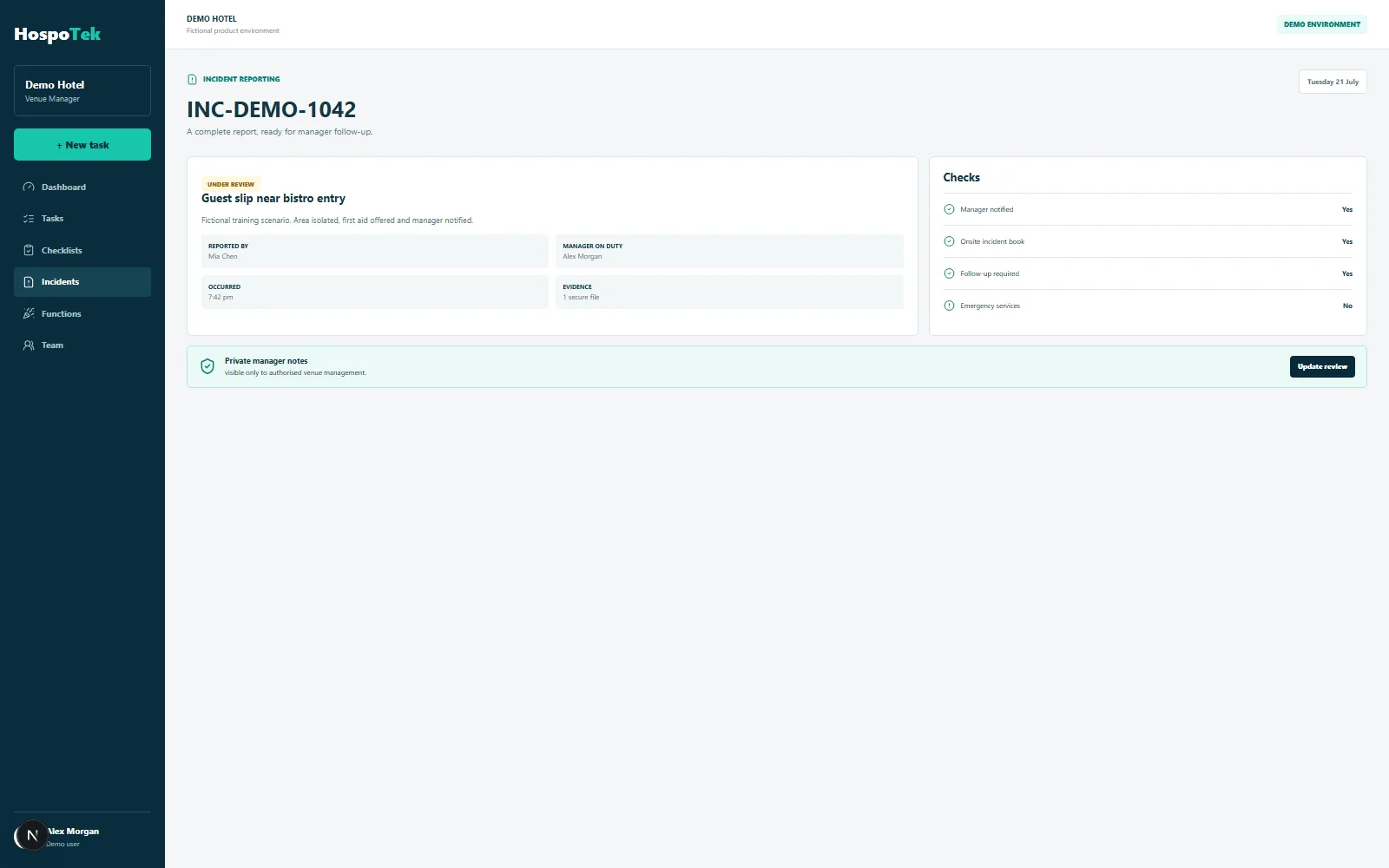
- Incidents, hazards or guest matters that still require authorised follow-up
- Functions, bookings or service changes that affect the next shift
- Stock, equipment or maintenance issues that change how the venue can operate
- Staffing changes, absences or role coverage relevant to the next trading period
- Decisions already made, so the next manager does not unknowingly reverse them
Keep routine completion separate from exceptions
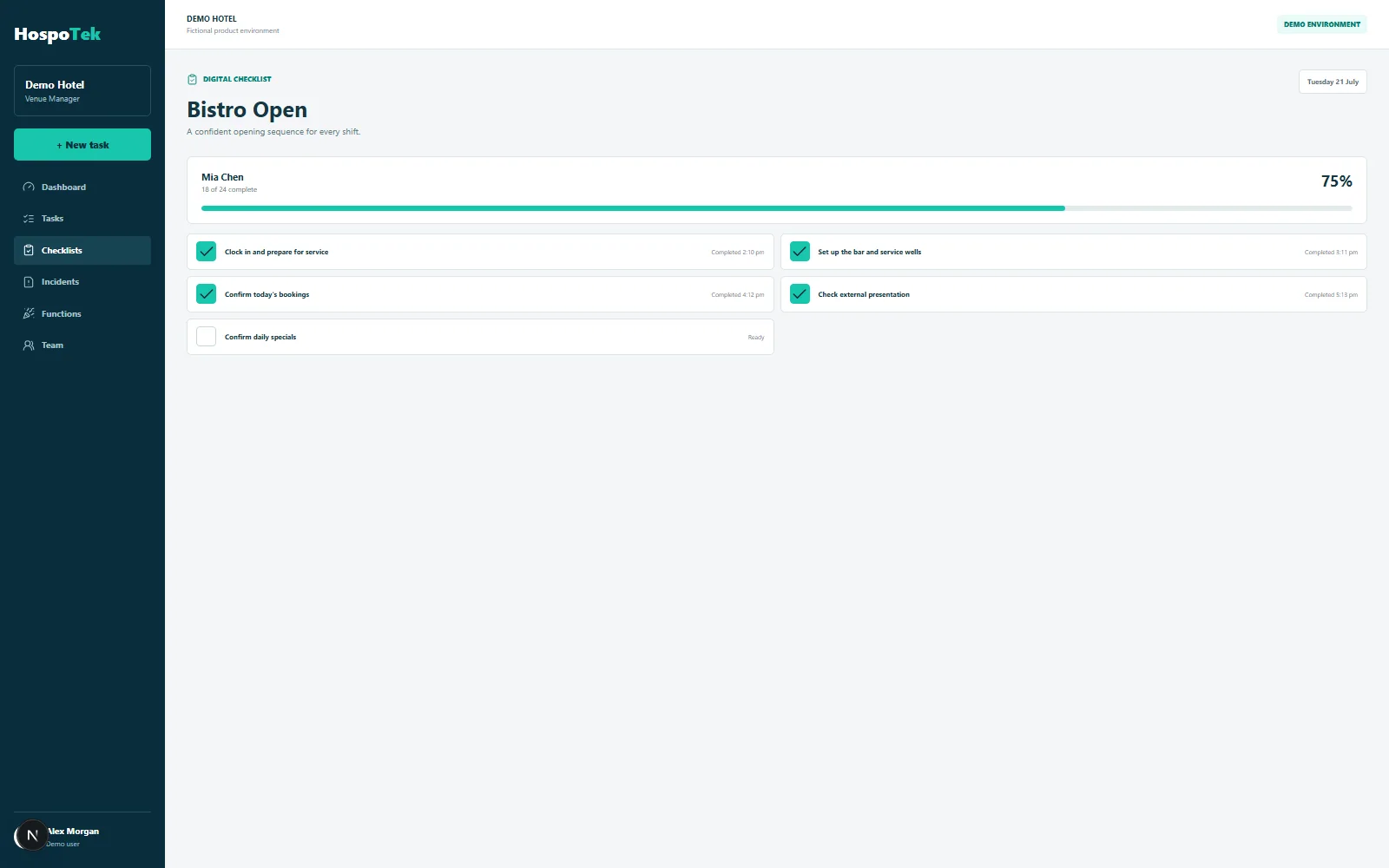
When every completed task is copied into the handover, the items that need attention become harder to find. Let checklists and task records prove routine completion. Use the handover to explain exceptions, constraints and decisions.
This also makes the record fairer to the team. The handover becomes a shared operating tool rather than a list of complaints about the previous shift. Describe the work and its status, not assumptions about a person's attitude or intent.
Design the handover for a fast scan
The incoming manager may be reading the handover while checking the floor, speaking with a supervisor or preparing for service. Put the highest-risk and most time-sensitive items first, then group the rest by department or operating area.
Use consistent labels such as Action required, Monitor, Information only and Closed. If an item belongs in a formal incident, maintenance or function workflow, link to that record instead of duplicating sensitive or changing detail.
- Lead with what needs action before the next service period
- Use short headings and one clear status per item
- Name the owner and expected next step
- Link to the source record where more detail is authorised
- Record when the handover was reviewed or acknowledged
Close the loop on yesterday's handover
A handover system loses credibility when open items simply roll forward. At the start of the next shift, confirm the priorities and assign anything without an owner. During the shift, update the source task, incident or function record as the work changes.
Managers should periodically review repeated handover themes. The pattern may reveal unclear standards, unreliable equipment, gaps in staffing or a process that needs redesign. The aim is not to create more reporting—it is to remove the same preventable problem from tomorrow's handover.